

Product Knowledge
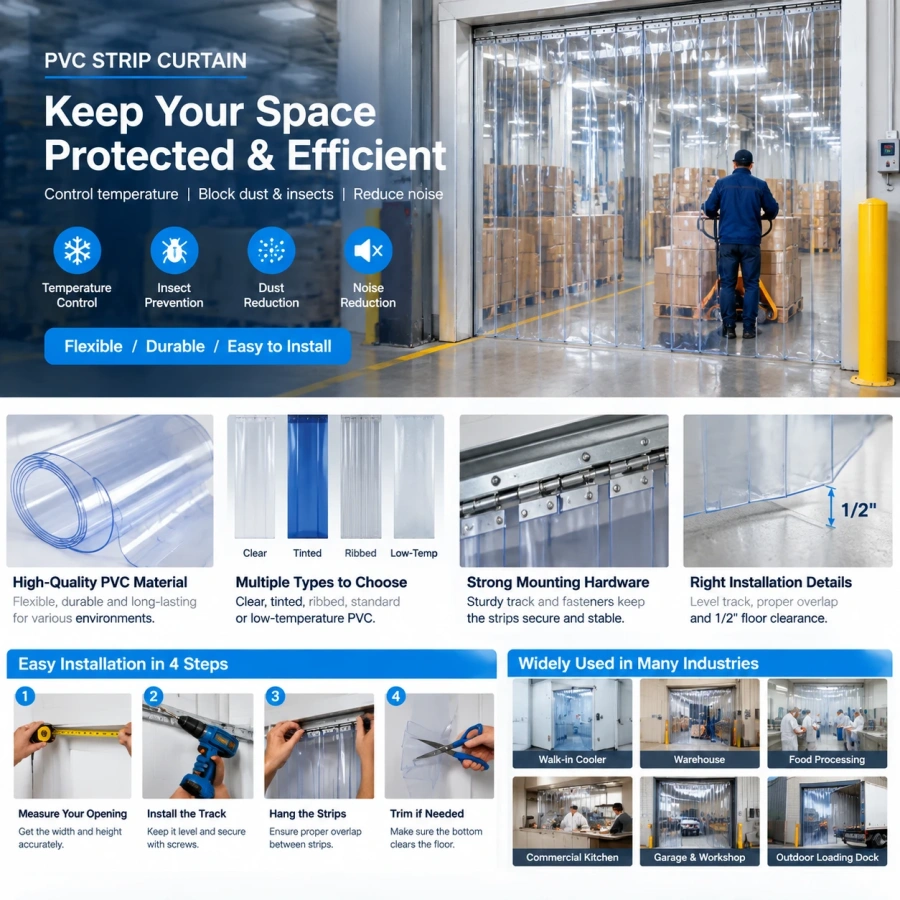
Plastic Curtain Door Strips: A Practical Guide for Homes and Businesses
You have probably walked through a set of clear plastic strips hanging in a doorway and wondered if they would work for your space. Maybe you need to keep cold air in a walk-in cooler, or you want to block dust and bugs from a warehouse opening. Plastic curtain door strips are a simple and flexible solution, but only if you choose the right size, material, and mounting style. This guide walks you through what plastic curtain door strips are, how to pick them, and how to install and maintain them without guesswork.
Key Takeaways:
- Plastic curtain door strips are flexible, overlapping PVC panels hung over a doorway to control temperature, pests, dust, and noise.
- The two most important buying decisions are correct doorway measurements and strip overlap.
- Standard PVC works for most indoor uses, while low-temperature PVC handles cold-storage conditions.
- Proper installation means a level doorway mounting track, slight floor clearance, and enough overlap between strips.
- Most strips can be cleaned with mild soap and water, and individual damaged strips can be replaced.
- Plastic curtain door strips are not a security barrier; use them only for environmental separation.
What Are Plastic Curtain Door Strips?
Plastic curtain door strips are exactly what they sound like: long, flexible strips of plastic that hang down from a doorway opening. The strips overlap slightly so they create a barrier while still allowing people, carts, and pallet jacks to pass through. You do not need to open a door or slide a panel. You simply walk through the strips, and they fall back into place.
These strips are also called PVC strip curtains, vinyl strip doors, or strip doors. The names all refer to the same basic product—clear or tinted PVC strips mounted to a doorway track.
Common Materials and Names
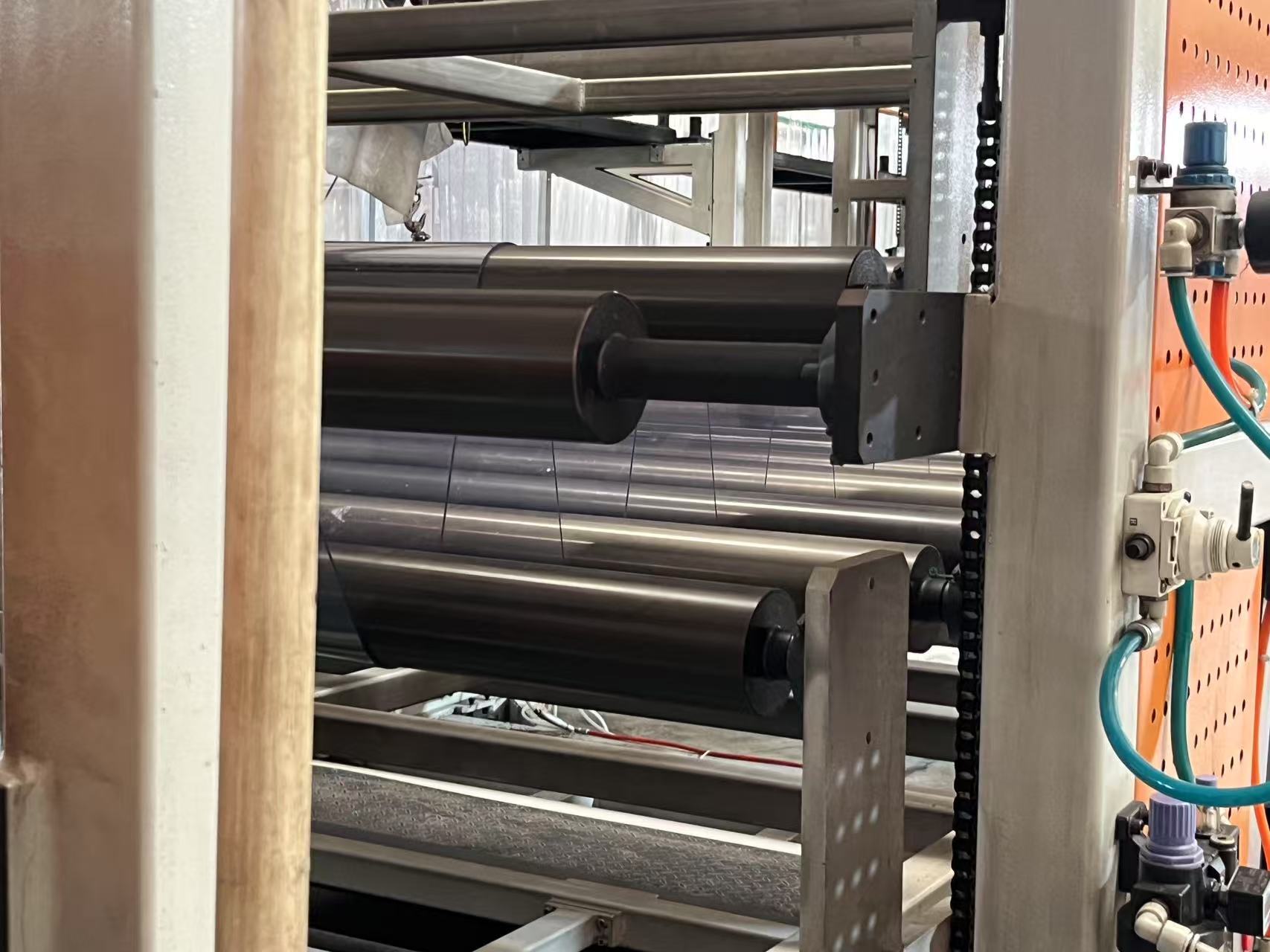
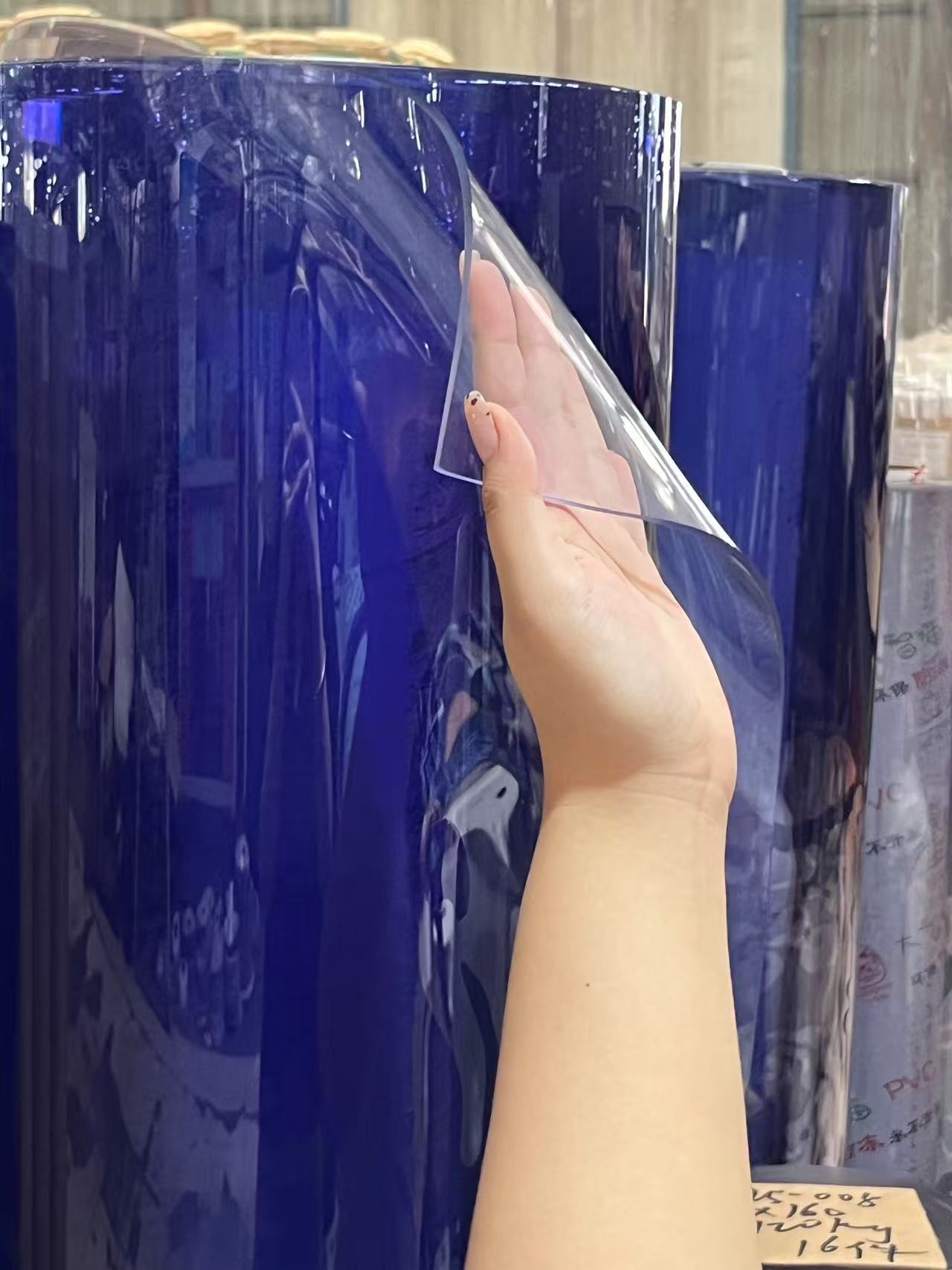
Most plastic curtain door strips are made from PVC, which stands for polyvinyl chloride. PVC is popular because it is flexible, durable, and available in different thicknesses and widths. You may also hear the term "vinyl" used, which is the same general material family. In this guide, "plastic curtain door strips," "PVC strip curtains," and "vinyl strip doors" all mean the same thing.
Where You'll Typically See Them
You will typically see plastic curtain door strips in walk-in coolers, freezers, warehouses, garages, food prep areas, and manufacturing facilities. They are also used in commercial kitchens, distribution centers, and any spot where a doorway needs to stay open for traffic but still block air, dust, or pests. For residential use, homeowners sometimes install them in garages, patios, and utility rooms.
Why Overlap Matters More Than You Might Think
The overlap between strips is not just a detail—it is the entire working principle. When strips hang straight and overlap by the right amount, they create a series of small, flexible seals that move independently. When a person or cart passes through, only a few strips swing away at a time. The others stay in place, which means the barrier never fully opens. If you hang the strips so they barely touch or leave small gaps, the curtain fails at exactly the moment it matters most: when traffic is moving through and the doorway is effectively open. This is why professional installers treat overlap as the foundation of the whole system. A curtain that was measured to the exact doorway width with no overlap will always have seams that let air and insects through.

Why People Use Plastic Curtain Door Strips
The main reason people install plastic curtain door strips is to solve a specific problem without slowing down traffic. The most common problems are temperature loss, pests, dust, and noise. In most cases, a solid door would work, but it would slow people down or create a safety hazard in a busy opening. Plastic strips give you a middle option.
Temperature Control and Energy Savings
If you have a heated or cooled space, an open doorway lets that conditioned air escape. Plastic curtain door strips help reduce that loss. They do not make a perfect seal like an insulated door, but they cut down on the exchange of warm and cold air. This helps your heating or cooling system work less, which can lower energy costs. The strips are especially useful in walk-in coolers, freezers, and loading areas where doors stay open for long stretches.
Think about a restaurant kitchen. The cook needs to move between a hot line and a walk-in cooler dozens of times in a single shift. Every trip through a solid door means opening, holding, and closing it—or propping it open and losing cold air. With strip curtains, the cook can push through a tray of ingredients in one hand and a mixing bowl in the other without stopping. The strips part and fall back instantly. Over the course of a busy weekend, that means the cooler door stays closed for hundreds of small moments that would otherwise be open against a rubber wedge. That is where the savings live, not in a single dramatic moment but in the cumulative effect of hundreds of small passes.
Insect Control, Dust, and Noise Reduction
Overlapping PVC strips also create a physical barrier for flying insects, dust, and some outdoor debris. They are not a replacement for good sanitation or regular pest control, but they reduce the number of easy entry points. In a warehouse or workshop, strips can also dampen some noise from equipment or outside traffic. In food prep areas, strip curtains can support sanitation efforts by limiting airborne dust and pests near open doorways.
From a facilities management perspective, the placement of the strips matters as much as the product itself. A dock door that opens onto a loading yard has a different pest and dust profile than an interior doorway between two production areas. For exterior-facing openings, installers often recommend tinted or lightly tinted strips because they reduce glare from daylight and make it easier for forklift operators to judge depth when driving through. Clear strips are fine for interior doorways where lighting is controlled.
Types of Plastic Curtain Door Strips
Before you shop, it helps to know that not all plastic curtain door strips are the same. The right choice depends on where the doorway is and what passes through it. Most differences come down to the PVC formulation and the visual style of the strips.
Standard, Low-Temperature, and Anti-Static PVC
Standard PVC strips are the most common and the most budget-friendly. They work well for general indoor doorways where temperatures stay moderate. If your opening leads to a cold storage or freezer area, choose low-temperature PVC. Standard PVC can become stiff or brittle in very cold conditions, while low-temperature PVC stays flexible in freezing environments. For walk-in freezers or cold-climate loading docks, low-temperature PVC is the safer choice. Anti-static PVC strips are a specialty option for electronics areas, clean rooms, and facilities where static buildup could damage products or equipment.
The reason low-temperature PVC behaves differently comes down to the plasticizer formulation. Plasticizers are the additives that give PVC its flexibility. In standard PVC, those additives can stiffen as temperatures drop, which is why a strip that bends easily at room temperature can snap like a candy cane in a freezer. Low-temperature PVC uses a different plasticizer system that keeps the material supple and soft well below freezing. If you are outfitting a freezer that runs at –10°F or colder, standard PVC is a poor investment regardless of how thick it is. The failure is not about thickness; it is about chemistry.
Clear, Tinted, and Ribbed Options
Clear PVC strips are the default choice because they preserve visibility. People can see what is on the other side before walking through. Tinted strips reduce glare and can mark different zones or traffic paths. Some tinted options also help reduce heat from bright lighting. Ribbed strips have a textured surface that can hide small scratches and scuffs better than smooth clear strips. This makes ribbed options a good match for a high-traffic warehouse doorway.
A practical detail that often gets overlooked: ribbed strips are harder to clean than smooth clear strips. The texture hides scratches, but it also traps dust and residue in the grooves. In food processing areas where sanitation is inspected, smooth clear strips are usually the better choice even though they show wear sooner. The inspection requirement wins over the aesthetic durability of ribbed PVC.
How to Choose the Right Plastic Curtain Door Strips for Your Space
The most common buying mistake is ordering the wrong size or thickness. You can avoid that by measuring carefully and matching the strip width and thickness to your traffic type. This is where a little planning pays off.
Measuring Your Opening Correctly
Start by measuring the width of your doorway opening at the top, middle, and bottom. Use the widest measurement as your base. Next, measure the height from the mounting surface to the floor. Plan for the strips to clear the floor by about 1/2 inch so they do not drag or curl. If you need a full seal at the bottom, you can let the strips barely touch the floor, but too much contact causes wear and curling.
Now decide how much overlap you want. A common overlap is 1–2 inches per strip. That means if your doorway is 120 inches wide and you choose 8-inch-wide strips with 2 inches of overlap, each strip effectively covers about 6 inches. Divide the doorway width by that effective coverage to find the number of strips you need. Write that number down before ordering.
For a standard residential garage door opening of about 108 inches, choose 8-inch strips with 2 inches of overlap. Each strip then covers 6 inches. Divide 108 by 6, and you get 18 strips. That simple calculation avoids the frustration of ordering a kit that is too narrow and discovering gaps after you have already mounted the track.
Matching Strip Width and Overlap to Traffic
Narrower strips, usually around 4 inches wide, are easier to walk through and are a good match for pedestrian doorways. Wider strips, such as 8 or 12 inches, handle cart and forklift traffic better because they do not swing as wildly. Thicker PVC, typically around 0.080 to 0.160 inches, holds up better in high-traffic, industrial settings. Thinner strips work for light pedestrian use.
Also check your mounting surface. Most strips hang from a metal or PVC mounting track that needs to be attached to a wall, door frame, or ceiling. Make sure the surface can hold the track and the weight of the strips. Check the temperature range of your space, and if the doorway gets direct sunlight, ask about UV-stabilized PVC to reduce cracking and yellowing.
One common error is treating the doorway measurement as the only number that matters. Buyers often order a kit that covers the exact opening width without adding overlap, only to find the curtain leaves finger-wide gaps between strips. Those gaps are not cosmetic; they are channels for air, dust, and insects. Always calculate with overlap included, and when in doubt, order one or two extra strips. It is far easier to remove a strip than to install one you do not have.
Why Hardware Quality Deserves More Attention Than It Gets
The PVC strips are the visible star of the installation, but the hardware does the long-term work. A flimsy mounting track will flex, sag, and eventually pull away from the wall, especially on wide doorways or in high-traffic areas. Facility managers who deal with these systems daily tend to focus on three hardware details: the gauge of the mounting track, the spacing of the mounting holes, and the corrosion resistance of the fasteners. In cold storage or wash-down areas, moisture collects on the track and hardware. Stainless steel or coated fasteners last much longer than standard zinc screws in those environments. If your doorway is in a damp or wash-down area, buy the hardware upgrade. Replacing a rusted track is a bigger job than paying a little more upfront.
How to Install Plastic Curtain Door Strips
Installing plastic curtain door strips is a manageable DIY project if you have the right tools and a level mounting track. The goal is simple: hang the strips straight, with consistent overlap, and leave the right amount of floor clearance.
Tools and Preparation
Gather a level, a drill, screws appropriate for your wall or frame material, a measuring tape, and a doorway mounting track rated for your doorway width. Some kits include the track and hardware. Lay out all the strips and count them before you start. A second person helps when you are lifting and aligning the track, especially on wide openings.
Step-by-Step Hanging Tips
First, hold the doorway mounting track above the doorway and mark your screw holes. Use a level to make sure the track is not crooked. A crooked track causes uneven strip lengths and bad overlap. Drill pilot holes, then attach the track with screws. Next, slide the strips into the track according to the kit instructions. Most tracks let you clip or slide individual strips into place. Space them so each strip overlaps the next by the amount you planned. After all strips are hung, step back and check the bottom line. Trim individual strips if needed, and adjust so they clear the floor by about 1/2 inch.
Imagine you are installing a curtain on a mid-sized walk-in cooler in a small deli. You install the track, slide in 8-inch strips, and step back. The bottom line is uneven—some strips just graze the floor while others hang 2 inches above it. That unevenness is not random. It usually traces back to a track that was level at the ends but slightly bowed in the middle, or to minor variations in the floor. Use the level to check the track at three points: left, center, and right. If the track is straight and the floor is simply uneven, you can trim individual strips with heavy scissors or a utility knife, taking small amounts off until the line looks even. Mark the trim line while the strip is hanging rather than cutting on a flat table, because the hanging position is the only measurement that counts.
Common Installation Mistakes to Avoid
The most common mistakes are a crooked track, strips that are too long, and insufficient overlap. A crooked track makes the whole curtain look uneven and creates gaps at the bottom. Strips that drag on the floor curl and wear out quickly. Too little overlap leaves open seams that let in air, dust, and insects. If your doorway sees heavy forklift traffic, add a little more overlap or choose thicker strips so the barrier stays effective.
Another mistake that shows up often in DIY installs is using the wrong fastener length. Mounting screws that are too long can punch through the other side of a thin door frame or damage electrical wiring hidden above the doorway. Screws that are too short will fail under the repeated tugging of strips being walked through. Check your surface material, and if you are not sure what is inside the wall or frame, use a shorter screw with a wall anchor rated for the load rather than guessing with a longer one.
Cleaning and Maintenance
Plastic curtain door strips stay functional longer when you clean them regularly and replace only the damaged pieces. A full replacement is rarely necessary unless the whole curtain is severely worn.
Routine Cleaning Steps
Use a mild soap and lukewarm water to wipe both sides of each strip. A soft cloth or sponge works well. Rinse with clean water and let the strips air dry or wipe them with a clean dry cloth. Avoid harsh solvents, abrasive pads, and strong chemicals. They can cloud PVC and make it brittle over time. For food areas, follow any local sanitation schedule and use a cleaner that is approved for food-contact surfaces.
The right cleaning frequency depends on the environment. In a bakery or flour-handling area, a fine layer of dust settles quickly and can bake onto the strips near warm doorways. In that setting, a weekly wipe-down is often necessary. In a low-traffic interior doorway between two storage rooms, a monthly cleaning may be enough. The key is consistency: a strip curtain left unwashed for months develops a cloudy film that is much harder to remove once it has set. That cloudiness also cuts down visibility, which increases the chance of cart and forklift collisions near the doorway.
When to Replace Individual Strips
Replace individual strips when they become cracked, heavily yellowed, warped, or so scratched that you can no longer see through them. Most mounting tracks let you remove one strip without taking down the entire curtain. Order a few extra strips with your initial purchase so replacements match the same color, width, and thickness.
One part of the system that often gets ignored is the top tracking hardware. Every few months, check that the track is still securely fastened and that no fasteners have loosened. Heavy traffic will slowly work screws loose, especially on wide doorways where strips are constantly swung aside. A loose track can fall or twist, and the failure mode is usually sudden—not gradual. A two-minute check with a drill or screwdriver avoids a much bigger repair later.
Frequently Asked Questions About Plastic Curtain Door Strips
How do I measure for plastic curtain door strips?
Measure the width of your opening at the top, middle, and bottom, then use the widest measurement. Add 1–2 inches of overlap per strip when calculating how many strips you need. For height, leave about 1/2 inch of clearance above the floor so the strips don't drag or curl.
What is the difference between standard and low-temperature PVC strip curtains?
Standard PVC can stiffen and crack in freezing temperatures, while low-temperature PVC uses a different plasticizer formula to stay flexible in cold storage or freezers. If the doorway leads to a freezer running below 32°F, choose low-temperature PVC for safety and longevity.
How do you clean PVC strip curtains without damaging them?
Use a mild soap and lukewarm water with a soft cloth or sponge, then rinse and dry. Avoid harsh solvents, abrasive pads, and strong chemicals because they can cloud the PVC and make it brittle over time. Cleaning frequency depends on the environment—weekly for dusty or food-prep areas, monthly for low-traffic spaces.
Can plastic curtain door strips be installed outdoors?
Yes, but outdoor installations require UV-stabilized PVC and a heavy-duty mounting track to handle sunlight and wind. Standard indoor strips may degrade faster in direct sun and flutter excessively in windy conditions, so choose weather-rated hardware if the opening is exposed.
Can I replace one damaged strip on a PVC strip curtain?
Yes, most mounting tracks allow you to remove and replace a single strip without taking down the entire curtain. It's smart to order a few extra strips with your initial purchase so replacements match the original color, width, and thickness.
Making the Right Call for Your Space
Start by measuring your doorway and identifying your main problem: temperature control, pests, or dust. That single step narrows down the strip type, thickness, and overlap you need. Then compare strip materials and mounting kits before you buy. A little measurement work upfront avoids the frustrating reality of strips that are too short, too flimsy, or spaced too far apart.
Your final checklist should include five things: the doorway width with overlap included, the strip width and thickness matched to traffic type, the PVC formulation for the temperature range, the mounting hardware for the environment, and the floor clearance. If any one of those five is off, the curtain will underperform no matter how good the other four are. The easiest way to avoid that is to write down your measurements and choices in one place before you order, then compare them against the product listing before you check out.
Download the plastic curtain door strip sizing and selection checklist to keep your measurements and choices organized before you order.
0users like this.